
Table of Contents
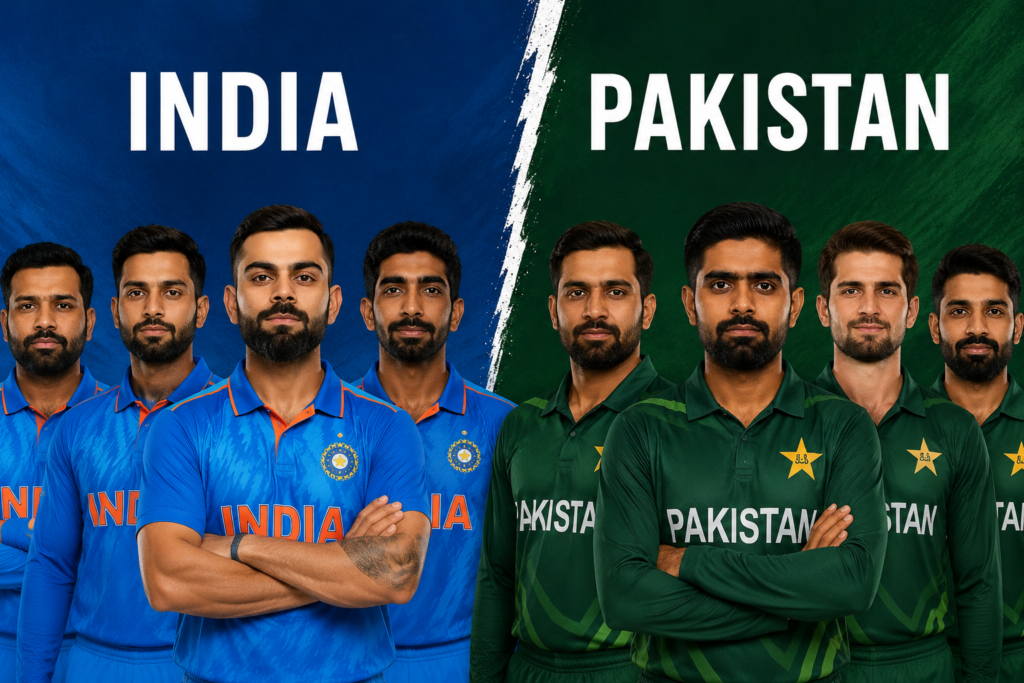
India and Pakistan cricket rivalry stands as one of the most intense and emotionally charged contests in the history of the sport. Every encounter between the two sides carries immense pressure, where skill, strategy, and temperament are tested under global attention. From early low-scoring battles to modern high-octane matches, this rivalry has evolved through dramatic turning points and unforgettable performances. Players on both sides have produced iconic moments that shaped match outcomes and defined careers. Beyond the scoreboard, these matches reflect national pride, fan emotions, and cricketing legacy. Each contest adds another chapter to a rivalry that continues to captivate millions worldwide with unmatched intensity and drama.
Recent Matches Table
| Match Date | Format | Venue / Ground | Winner | Margin | Player of Match | Top Run-Scorer |
| 2026-02-15 | T20I | R. Premadasa Stadium | India | 61 runs | Ishan Kishan | Ishan Kishan (77) |
| 2025-11-06 | HK6s | Tin Kwong Road Ground | India | 2 runs | Robin Uthappa | Robin Uthappa |
| 2025-09-28 | T20I | Dubai Intl Stadium | India | 5 wickets | Tilak Varma | Tilak Varma |
| 2025-09-21 | T20I | Dubai Intl Stadium | India | 6 wickets | Abhishek Sharma | Abhishek Sharma |
| 2025-09-14 | T20I | Dubai Intl Stadium | India | 7 wickets | Kuldeep Yadav | Salman Ali Agha |
| 2025-02-23 | ODI | Dubai Intl Stadium | India | 6 wickets | Virat Kohli | Virat Kohli |
Match Overview Table
| Broad Format | Total Matches | Venue Split | Toss Influence | Broad Result Trend | Key Phase Focus | Primary Stadiums |
| T20 Internationals | 17 games | Neutral venues | Bowl first favored | India leads 14-3 | Powerplay overs | Dubai / Colombo |
| One-Day Matches | 136 games | Mixed hosting | Bat first preferred | Pakistan leads 73-58 | Middle-over spin | Ahmedabad / Sharjah |
| Test Matches | 59 games | Bilateral tours | Draw high percentage | Pakistan leads 12-9 | Day 3 batting collapse | Multan / Bangalore |
| ICC World Cups | Multi-fixture | Global venues | High pressure factor | India dominant streak | Target defending | New York / Adelaide |
| Asia Cup Cycles | Multi-fixture | UAE & Sri Lanka | Toss dictates strategy | India heavy edge | Death-overs hitting | Colombo / Premadasa |
| Sixes / Exhibitions | Developmental | Sub-regional | Clear boundary focus | Fast-paced results | Power-hitting segments | Hong Kong |
Best Bowling Figures Table
| Bowler Name | National Team | Figures (Wkts/Runs) | Format | Match Venue | Calendar Year | Match Result |
| Anil Kumble | India | 10/74 | Test | Delhi | 1999 | India won |
| Imran Khan | Pakistan | 8/60 | Test | Karachi | 1982 | Pakistan won |
| Aaqib Javed | Pakistan | 7/37 | ODI | Sharjah | 1991 | Pakistan won |
| Naved-ul-Hasan | Pakistan | 6/27 | ODI | Jamshedpur | 2005 | Pakistan won |
| Deepti Sharma | India Women | 5/10 | T20I | Birmingham | 2026 | India won |
| Kuldeep Yadav | India | 5/25 | ODI | Colombo | 2023 | India won |
Statistical Comparison Table
| Metric Measured | Team India Record | Player (India) | Team Pakistan Record | Player (Pakistan) | Format Context | All-Time Leader |
| Highest Team Innings | 675/5 declared | Virender Sehwag | 699/5 declared | Javed Miandad | Test Cricket | Pakistan edge |
| Lowest Innings Total | 106 all out | Team Record | 116 all out | Team Record | Test Cricket | India lower |
| Most Individual Runs | 2,089 career runs | Sunil Gavaskar | 2,228 career runs | Javed Miandad | Test Rivalry | Javed Miandad |
| Highest Score (Single) | 309 runs | Virender Sehwag | 280 not out | Javed Miandad | Multan / Hyderabad | Virender Sehwag |
| Total Bowling Wickets | 99 total wickets | Kapil Dev | 94 total wickets | Imran Khan | Career Aggregates | Kapil Dev |
| Major Tournament Titles | 18 senior titles | Team Record | 6 senior titles | Team Record | ICC & ACC combined | India leads |
Match Result & Player of the Match Table
| Innings Segment | Total Score | Key Performer | Strike / Econ Rate | Wickets Taken | Dismissal Method | Ultimate Outcome |
| India Batting | 175/7 (20 overs) | Ishan Kishan | 192.50 SR | N/A (Batted) | Bowled Saim Ayub | Set target of 176 |
| Pakistan Bowling | 175/7 conceded | Saim Ayub | 6.25 Econ | 3 wickets | Varied variations | Kept India under 190 |
| Pakistan Batting | 114 all out (18 ov) | Usman Khan | 129.41 SR | N/A (Batted) | Caught off bowling | Under-performed chase |
| India Bowling | 114 bowled out | Hardik Pandya | 5.33 Econ | 2 wickets | Bowled / Caught | Derailed target chase |
| India Spin Support | 114 bowled out | Varun Chakaravarthy | 5.67 Econ | 2 wickets | Caught in deep | Closed out lower order |
| Match Conclusion | Finalized scorecard | Ishan Kishan | 77 off 40 balls | Match MVP | Awarded post-match | India won by 61 runs |
Early Encounters That Set the Tone
The beginning of this cricket rivalry was shaped by uncertainty, intensity, and a strong sense of national pride on both sides. The earliest matches were not just sporting contests but emotionally charged events that carried the weight of expectations from millions of fans. Players entered the field aware that every run and every wicket would be remembered far beyond the boundary ropes. Conditions often favored disciplined bowling and cautious batting, which made early scorelines relatively low but extremely competitive. Fielding errors and moments of brilliance played a major role in deciding outcomes. These matches established a psychological edge that would influence future encounters, as both teams began to understand the importance of handling pressure in critical situations. Over time, these early battles created a foundation of respect mixed with fierce competition, setting the tone for decades of unforgettable cricketing drama and tactical evolution between the two sides.
| Match Type | Venue Condition | Winning Side Pattern | Key Factor |
| Early ODI | Slow pitches | Low scoring chase | Bowling control |
| Early Test | Dry surfaces | Draw or close win | Patience batting |
| Neutral Cup | Balanced pitch | Pressure finish | Fielding impact |
| Bilateral | Home advantage | Home dominance | Crowd support |
Building Pressure in Global Tournaments
As international cricket expanded, encounters between these two sides became central attractions in global tournaments. ICC events transformed ordinary matches into high-pressure spectacles where reputation and ranking were equally important as skill execution. Players often admitted that mental preparation became more challenging than technical readiness. Each delivery carried significance, and momentum shifts were rapid and decisive. Tactical planning evolved, with teams studying opposition weaknesses in detail before stepping onto the field. Media coverage amplified expectations, turning every match into a global event watched by millions. Scorecards from this phase show closely fought battles where small partnerships or crucial breakthroughs defined results. The pressure environment also produced unexpected heroes who stepped up in critical moments. Over time, these tournament encounters became symbolic of cricketing excellence under pressure, shaping how both teams approached knockout stages and league matches in major competitions.
| Tournament Stage | Pressure Level | Common Result Pattern | Decisive Element |
| Group Stage | High | Close contests | Middle overs control |
| Semi Final | Very High | Low scoring games | Bowling discipline |
| Final Stage | Extreme | Unpredictable result | Nervous execution |
| Super Four | High | Momentum swings | Powerplay impact |
Batting Rivalries That Defined Generations
Batting performances have often been the centerpiece of this rivalry, with top-order players setting the tone for their teams. Indian batting strength frequently focused on structured innings building, while the opposing side relied on aggressive stroke play and quick acceleration. These contrasting styles created engaging contests where technique and temperament were tested equally. Individual battles between batters and bowlers became iconic moments remembered for years. Certain innings stood out not only for runs scored but also for the pressure under which they were constructed. Partnerships played a crucial role in shifting momentum, especially during mid-innings phases when scoring became difficult. Fans celebrated every boundary as a statement of dominance, while wickets triggered emotional reactions across stadiums. Over time, batting duels became symbolic of national pride, with every generation producing new heroes who carried forward the legacy of high-intensity cricketing duels.
| Batting Phase | Typical Approach | Risk Level | Impact on Match |
| Powerplay | Controlled start | Medium | Foundation setup |
| Middle Overs | Rotation focus | Low | Stability building |
| Death Overs | Aggressive hit | High | Final score boost |
| Chase Phase | Calculated risk | Very High | Match deciding |
Fast Bowling Aggression and Fear Factor
Fast bowling has always been one of the most defining elements of this cricket rivalry. Express pace, short-pitched deliveries, and reverse swing created moments of fear and excitement simultaneously. Batsmen were often tested physically and mentally, especially when facing sustained spells under pressure. Bowlers used aggressive field placements and strategic variations to unsettle batting lineups. The intensity of these encounters led to several low-scoring matches where every wicket felt like a breakthrough in a battle of endurance. Over time, both teams developed stronger pace attacks to counter each other’s strengths, resulting in balanced contests. Crowd reactions to fast bowling spells added another layer of drama, turning stadiums into high-energy environments. These battles also produced memorable performances where bowlers single-handedly changed the direction of matches. The fast bowling era remains one of the most emotionally charged phases in this rivalry’s history.
| Bowling Phase | Speed Strategy | Key Skill | Match Influence |
| New Ball | Swing attack | Line control | Early wickets |
| Middle Overs | Pressure build | Seam movement | Run restriction |
| Death Overs | Yorkers plan | Accuracy | Final defense |
| Short Ball | Intimidation | Bounce usage | Psychological edge |
Spin Tactical Wars in Middle Overs
Spin bowling has played a crucial role in shaping match outcomes, especially during middle overs when control and patience become essential. Spinners from both sides have often dictated the flow of the game by breaking partnerships and slowing down scoring rates. Pitch conditions in the subcontinent further enhanced the importance of spin, making these battles highly tactical. Captains relied heavily on spin options to regain control when momentum shifted. Batsmen had to carefully rotate strike while minimizing risks against turning deliveries. This phase of the game often decided whether teams could build a strong total or restrict the opposition effectively. Many matches saw sudden collapses triggered by tight spin spells that created pressure through dot balls. The psychological aspect of facing quality spin under pressure added depth to these encounters, making them strategic battles within the larger contest.
| Spin Type | Usage Phase | Effectiveness | Match Role |
| Off Spin | Middle overs | High control | Partnership break |
| Leg Spin | Attack phase | Wicket taking | Momentum shift |
| Left Arm | Variation use | Restriction | Run control |
| Flighted | Pressure build | Deception | Mistake creation |
World Cup Clashes That Changed History
World Cup encounters between these sides have consistently delivered some of the most memorable moments in cricket history. These matches carry unmatched pressure, with global audiences watching every delivery. Teams often approach these games with cautious strategies, prioritizing stability over aggression. However, individual brilliance frequently changes the course of play, turning balanced contests into one-sided victories. Scorecards from these matches reflect the intensity, often showing collapses, steady partnerships, or game-defining spells. Emotional pressure plays a major role, as players represent not just teams but national pride on the world stage. These encounters have produced iconic performances that are still discussed in cricket analysis today. Each World Cup meeting adds a new chapter to the rivalry, reinforcing its status as one of the most significant fixtures in global cricket.
| World Cup Year | Match Nature | Key Moment | Outcome Type |
| Early Edition | Low scoring | Bowling dominance | One-sided |
| Mid Era | Balanced | Batting partnership | Close finish |
| Recent Era | High scoring | Chase pressure | Tactical win |
| Knockout Stage | Intense | Final overs drama | Emotional result |
Modern Era Evolution and Tactical Shift
In the modern era, the rivalry has evolved significantly with advancements in fitness, analytics, and match preparation strategies. Teams now rely heavily on data-driven decisions, studying opposition patterns in detail before matches. The introduction of T20 cricket has increased the pace of the game, making every over more impactful. Players are now more versatile, capable of adapting to different match situations quickly. Fielding standards have also improved drastically, reducing errors and increasing run-saving efficiency. Scorecards from recent matches show higher totals and faster scoring rates, reflecting the evolution of modern cricket. Despite these changes, the emotional intensity remains unchanged, with fans continuing to treat each encounter as a major event. The rivalry now blends traditional intensity with modern strategy, creating a unique balance between legacy and innovation.
| Modern Factor | Improvement Area | Impact Level | Match Outcome Effect |
| Fitness | Endurance | High | Fewer injuries |
| Analytics | Strategy planning | Very High | Better decisions |
| Fielding | Run saving | High | Tight finishes |
| T20 format | Scoring speed | Extreme | High totals |
Emotional Pressure and Crowd Influence
Crowd energy has always been a defining feature of these matches, creating an atmosphere that is unmatched in international cricket. Stadiums filled with passionate supporters generate immense noise, which often influences player focus and decision-making. Young players, in particular, experience heightened pressure when stepping into such environments. This emotional intensity can lead to unexpected performances, both positive and negative. Some players thrive under pressure, delivering career-defining innings or match-winning spells, while others struggle to maintain consistency. Crowd reactions to every boundary, wicket, or fielding error amplify the importance of each moment. This emotional environment transforms matches into psychological battles as much as physical contests. Over time, these factors have contributed to some of the most dramatic finishes in cricket history, where momentum shifts occurred within a single over.
| Crowd Factor | Player Impact | Positive Outcome | Negative Outcome |
| Noise Level | Focus challenge | Motivation boost | Mistimed shots |
| Pressure | Mental strain | Peak performance | Early dismissal |
| Support | Energy rise | Confidence gain | Over-aggression |
| Expectations | Stress level | Hero moments | Execution error |
Conclusion
The rivalry between India and Pakistan has grown far beyond ordinary cricket, becoming a symbol of passion, pressure, and historic competition. Over decades, matches have delivered unforgettable scorecards, dramatic finishes, and legendary performances that remain etched in memory. Both teams have evolved tactically, adapting to modern cricket while preserving the emotional intensity that defines their encounters. Whether it is a World Cup clash or a bilateral meeting, every game brings unmatched excitement and expectation. This rivalry continues to inspire new generations of players and fans, ensuring that its legacy remains one of the most powerful stories in world cricket.
FAQs
1. Why is this rivalry so famous in cricket?
Because it combines high skill level with strong emotional and national significance, making every match globally watched and highly intense.
2. Which tournaments feature most of these matches?
Most encounters happen in ICC events like the World Cup, T20 World Cup, and Asia Cup due to limited bilateral series.
3. What makes these matches so competitive?
Pressure, crowd intensity, and unpredictable momentum shifts make outcomes uncertain and highly competitive.
4. Which playing styles usually dominate?
It varies, but strong bowling attacks and pressure-handling batting performances often decide matches.
5. Why are these scorecards often remembered?
Because they usually include dramatic collapses, match-winning innings, and iconic bowling spells that define cricket history.