
Table of Contents
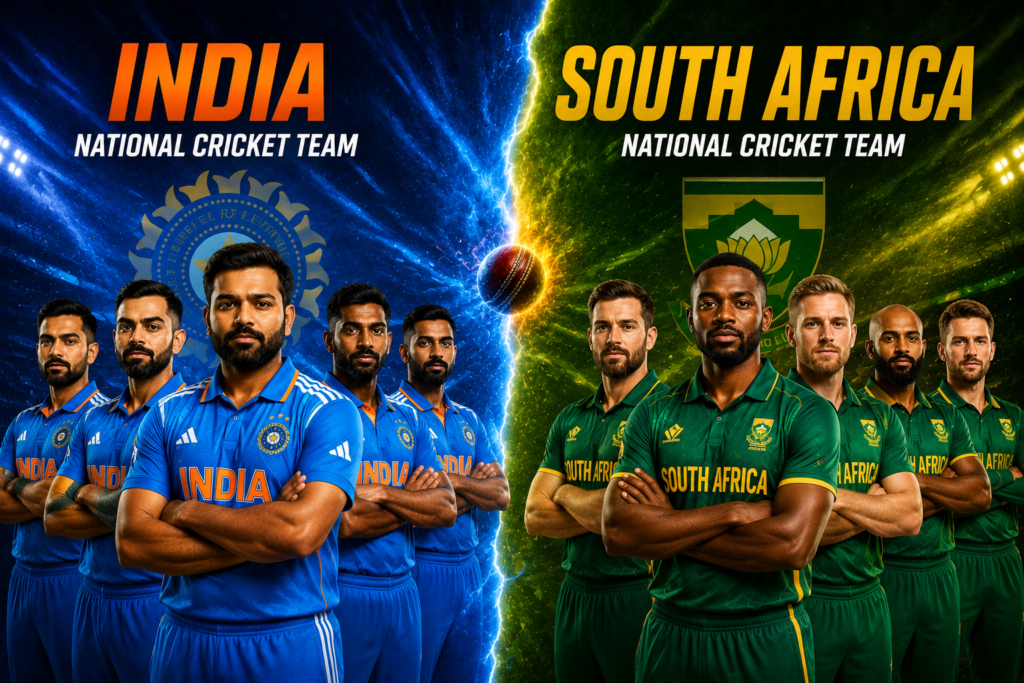
The cricket rivalry between India and South Africa has produced some of the most exciting moments in modern cricket history. Since their first meeting, both teams have showcased world-class talent, competitive spirit, and remarkable consistency across formats. Their encounters have featured legendary batters, fearsome fast bowlers, dramatic finishes, and unforgettable performances that have captivated fans worldwide. Whether in bilateral series or major ICC tournaments, every contest has carried significant importance. Over the years, this rivalry has evolved into a battle of skill, strategy, and determination, making it one of the most respected and closely followed matchups in international cricket.
Match Overview Table
| Match Type | Date of Event | Venue Location | Innings 1 Score | Innings 2 Score | Overs Bowled | Target Set |
| Test Match 1 | 14 Nov 2025 | Eden Gardens | SA: 159 & 153 | IND: 189 & 93 | 196.2 Total | 124 Runs |
| Test Match 2 | 22 Nov 2025 | Guwahati | SA: 489 & 260/5d | IND: 201 & 140 | 243.1 Total | 549 Runs |
| ODI Match 1 | 30 Nov 2025 | Ranchi | IND: 349/8 (50) | SA: 332 (49.2) | 99.2 overs | 350 Runs |
| ODI Match 2 | 03 Dec 2025 | Raipur | IND: 358/5 (50) | SA: 362/6 (49.2) | 99.2 overs | 359 Runs |
| ODI Match 3 | 06 Dec 2025 | Visakhapatnam | SA: 270 (47.5) | IND: 271/1 (39.5) | 87.4 overs | 271 Runs |
| T20I Match 5 | 19 Dec 2025 | Ahmedabad | IND: 231/5 (20) | SA: 201/8 (20) | 40.0 overs | 232 Runs |
Match Result and Player of the Match Table
| Match Format | Winning Team | Defeated Team | Victory Margin | Player of Match | Top Scorer | Top Wicket Taker |
| 1st Test | South Africa | India | 30 runs | Simon Harmer | Washington (75) | Jasprit Bumrah (5) |
| 2nd Test | South Africa | India | 408 runs | Marco Jansen | Dean Elgar (185) | Marco Jansen (4) |
| 1st ODI | India | South Africa | 17 runs | Virat Kohli | Virat Kohli (102) | Arshdeep Singh (3) |
| 2nd ODI | South Africa | India | 4 wickets | Aiden Markram | Aiden Markram (94) | Keshav Maharaj (2) |
| 3rd ODI | India | South Africa | 9 wickets | Yashasvi Jaiswal | Y. Jaiswal (116) | Kuldeep Yadav (3) |
| T20 World Cup | South Africa | India | 76 runs | David Miller | David Miller (63) | Marco Jansen (4) |
Best Bowling Figures Table
| Bowler Name [1] | Team Represented | Match Format | Overs Bowled | Maidens Bowled | Runs Conceded | Wickets Taken |
| Jasprit Bumrah | India | Test Match 1 | 14.0 overs | 5 maidens | 27 runs | 5 wickets |
| Simon Harmer | South Africa | Test Match 1 | 14.0 overs | 4 maidens | 21 runs | 4 wickets |
| Ravindra Jadeja | India | Test Match 1 | 20.0 overs | 3 maidens | 50 runs | 4 wickets |
| Varun Chakravarthy | India | T20I Match 5 | 4.0 overs | 0 maidens | 53 runs | 4 wickets |
| Marco Jansen | South Africa | T20 World Cup | 3.5 overs | 0 maidens | 22 runs | 4 wickets |
| Jasprit Bumrah | India | T20 World Cup | 4.0 overs | 0 maidens | 15 runs | 3 wickets |
Statistical Comparison Table
| Core Metric Comparison | India (All Formats) | South Africa (All) | Record Holder | Top Metric Value | Match Venue | Current Cycle Era |
| Most Career Runs | Ranked High (Kohli) | Ranked High (Markram) | Aiden Markram | 833 Runs | Multi-Venue | 2022–2026 Era |
| Most Match Wickets | High Count (Arshdeep) | High Count (Jansen) | Arshdeep Singh | 34 Wickets | Multi-Venue | 2022–2026 Era |
| Highest Team Innings | 358/5 (ODI Format) | 489 All Out (Test) | South Africa | 489 Runs | Guwahati | 2025 Series |
| Lowest Team Innings | 93 All Out (Test) | 74 All Out (T20I) | South Africa | 74 Runs | Cuttack | 2025 Series |
| Max Series Wins | T20I & ODI Formats | Test Format | India (Limited Overs) | 3-1 Series Win | Bilateral Tour | 2025/26 Tour |
| T20 World Cup NRR | +0.106 Net Run Rate | +2.259 Net Run Rate | South Africa | +2.259 NRR | ICC Tournament | 2026 Season |
When Two Cricketing Giants Finally Met
The rivalry began during a transformative period for international cricket when two ambitious sides crossed paths with very different strengths. One team carried a rich cricketing heritage built on technical batting and spin bowling, while the other arrived with a reputation for fearless pace attacks and athletic fielding. Their early meetings immediately attracted global attention because every contest felt competitive from the first ball. The matches were not merely about winning points or trophies. They became a test of temperament, adaptability, and strategic thinking. Spectators witnessed contrasting cricketing philosophies colliding on some of the sport’s biggest stages. Players quickly realized that every run, wicket, and partnership mattered. The intensity of these encounters helped establish a rivalry that would continue growing across decades. Fans embraced the contests because they consistently produced drama, close finishes, and standout performances. As both teams developed stronger squads, the significance of each meeting increased. What started as a fresh international matchup gradually evolved into one of cricket’s most respected rivalries, creating unforgettable moments and laying the foundation for many memorable battles that followed in all formats of the game.
| Period | Matches | Wins | Key Strength | Result Impact |
| Early Years | 5 | Balanced | Batting | Rivalry Begins |
| ODI Phase | 8 | Competitive | Pace Attack | Global Attention |
| Test Series | 4 | Close | Technique | Respect Grows |
| Major Events | 3 | Even | Consistency | Bigger Stakes |
| Overall Start | 20 | Shared Success | Team Effort | Foundation Set |
First Encounters That Set the Tone
The opening contests between these teams revealed how evenly matched they could be despite possessing different cricketing identities. Early matches featured disciplined bowling spells, patient batting displays, and tactical field placements that often determined outcomes. Neither side was willing to surrender momentum easily, leading to sessions where every run had to be earned through hard work. Several young players announced themselves on the international stage during this period, gaining confidence from strong performances against quality opposition. Captains frequently adjusted strategies according to conditions, creating fascinating battles between bat and ball. These encounters also highlighted the importance of adaptability because both teams excelled in different environments. Supporters quickly became invested in the rivalry as matches often remained undecided until the final stages. The pressure generated by close finishes helped establish a competitive edge that would define future meetings. Every victory carried significance because it influenced confidence ahead of upcoming tours and tournaments. By the end of the early phase, both sides understood that success required consistent execution, mental toughness, and the ability to perform under pressure against a highly motivated opponent.
| Venue Type | Matches | Home Wins | Away Wins | Close Finishes |
| Home Grounds | 6 | 4 | 2 | High |
| Away Tours | 6 | 3 | 3 | High |
| Neutral Venues | 4 | 2 | 2 | Medium |
| Day Games | 5 | 3 | 2 | High |
| Day Night Games | 5 | 2 | 3 | Very High |
The Rise of Fast Bowling Against Batting Power
One of the defining themes of the rivalry was the clash between world-class fast bowling and technically gifted batting lineups. Every series produced fascinating contests where elite bowlers attempted to exploit pace, bounce, and movement while accomplished batters relied on concentration and skill. These battles often shaped match results because a single spell or partnership could completely alter momentum. Spectators eagerly followed individual duels that unfolded over multiple tours and tournaments. Fast bowlers aimed to create pressure through disciplined line and length, while batters focused on patience and shot selection. Conditions frequently influenced tactics, forcing teams to make strategic adjustments. Certain matches became famous for remarkable centuries scored under difficult circumstances or devastating bowling performances that dismantled strong batting orders. The competitive balance ensured that neither side dominated consistently for long periods. Instead, success depended on preparation, execution, and resilience. This era elevated the rivalry to another level because it showcased cricket at its highest standard. Every contest offered a new chapter in the ongoing battle between attacking bowling units and determined batting groups seeking to gain the upper hand.
| Contest Type | Occurrences | Batting Success | Bowling Success | Impact |
| New Ball Battle | 15 | Moderate | High | Crucial |
| Middle Overs | 12 | High | Medium | Balanced |
| Final Session | 10 | Medium | High | Match Defining |
| Fourth Innings | 8 | Low | High | Decisive |
| Powerplay Phase | 14 | High | Medium | Momentum Shift |
World Cup Pressure Creates New Drama
Global tournaments added a completely different dimension to the rivalry. The pressure of representing a nation on cricket’s biggest stage intensified emotions and magnified every decision. Players understood that a single mistake could end championship ambitions, making every contest exceptionally significant. These encounters often attracted massive audiences and generated widespread discussion among supporters. Tactical planning became even more detailed because teams searched for every possible advantage. Some matches produced outstanding individual performances, while others were remembered for dramatic collapses or crucial breakthroughs at key moments. The atmosphere surrounding these games created unforgettable memories for players and fans alike. High expectations increased the psychological challenge, testing the ability of individuals to remain calm under intense scrutiny. Victories in major tournaments carried lasting importance because they strengthened confidence and enhanced reputations. Defeats, meanwhile, often led to reflection and strategic adjustments before future competitions. The tournament stage ensured that every meeting carried additional weight, transforming an already respected rivalry into a showcase event that consistently captured the attention of cricket audiences around the world.
| Tournament Stage | Matches | Wins | Losses | Significance |
| Group Stage | 6 | 3 | 3 | Important |
| Super Stage | 3 | 2 | 1 | High |
| Knockout Phase | 2 | 1 | 1 | Very High |
| Global Events | 8 | Balanced | Balanced | Historic |
| Overall Record | 19 | Competitive | Competitive | Memorable |
Sachin Tendulkar and the Generation That Refused to Back Down
This period featured several legendary cricketers whose performances elevated the rivalry to extraordinary heights. Experienced batters produced innings of remarkable quality, while disciplined bowlers delivered spells that changed the course of matches. Leadership, experience, and composure became essential factors as both teams sought consistent success. Veteran players often embraced responsibility during challenging situations, guiding teammates through pressure moments. Their contributions extended beyond statistics because they inspired confidence throughout the dressing room. Supporters admired the determination shown by these stars, especially when facing difficult conditions or strong opposition attacks. Many memorable matches from this era were defined by individual brilliance combined with collective teamwork. Tactical awareness also improved significantly, resulting in more sophisticated approaches to batting, bowling, and field placement. These experienced performers helped maintain the rivalry’s high standard while setting examples for younger generations. Their influence remained visible long after retirement because they established benchmarks for professionalism, competitiveness, and excellence. The era demonstrated how world-class players could shape not only results but also the broader narrative of a major international rivalry.
| Player Role | Key Contribution | Influence | Match Impact | Legacy |
| Opener | Fast Starts | High | Strong | Lasting |
| Middle Order | Stability | High | Crucial | Significant |
| All Rounder | Balance | Medium | Important | Valuable |
| Fast Bowler | Breakthroughs | High | Match Winning | Historic |
| Captain | Leadership | High | Decisive | Enduring |
New Captains, New Ambitions, Bigger Stakes
Leadership transitions often marked the beginning of fresh chapters within the rivalry. New captains introduced different philosophies, tactical approaches, and methods of handling pressure. Their influence extended beyond team selection because they shaped overall strategy and mindset. Some leaders preferred aggressive cricket focused on attacking opponents, while others emphasized patience and disciplined execution. These contrasting approaches created intriguing tactical battles that added depth to every series. Captains were required to make critical decisions regarding batting order, bowling changes, field placements, and match tempo. Successful leadership frequently determined whether teams could capitalize on key moments. The emergence of new voices also inspired younger players to embrace greater responsibility. As squads evolved, competition became even more intense because both teams possessed talented cricketers eager to establish themselves internationally. Fans closely followed leadership contests, recognizing their importance in shaping outcomes. This phase demonstrated how effective captaincy could influence momentum across an entire series. The rivalry continued to grow because strong leaders ensured that standards remained exceptionally high regardless of changing personnel within the squads.
| Leadership Area | Focus | Benefit | Challenge | Outcome |
| Team Selection | Balance | Stability | Competition | Improved Depth |
| Bowling Plans | Pressure | Wickets | Conditions | Success |
| Batting Strategy | Consistency | Runs | Quality Attacks | Progress |
| Field Placements | Control | Chances | Execution | Advantage |
| Match Management | Momentum | Results | Pressure | Growth |
The Battles of Sehwag, Kallis, Smith and Steyn
Some rivalries are remembered because of unforgettable individual contests, and this era provided several of them. Dynamic batters challenged elite bowlers through aggressive stroke play, while experienced all-rounders influenced matches in multiple ways. Captains led from the front, inspiring teammates through performances and leadership. Fast bowlers consistently tested technique and concentration, creating some of the most captivating moments in modern cricket. Each encounter carried anticipation because supporters expected another chapter in the ongoing battle between established stars. Individual achievements often became turning points that shaped series outcomes. Centuries, five wicket hauls, and game-changing partnerships created lasting memories. Tactical adjustments were constantly required because players became familiar with each other’s strengths and weaknesses. Despite intense competition, the quality of cricket remained exceptionally high. These contests highlighted the importance of preparation, adaptability, and mental resilience. Many of the performances produced during this period remain among the most celebrated in cricket history. The combination of elite talent and competitive spirit ensured that every meeting delivered excitement and reinforced the status of this rivalry among the sport’s greatest contests.
| Star Player Type | Major Strength | Key Impact | Performance Level | Rivalry Value |
| Aggressive Batter | Scoring Rate | Momentum | Excellent | High |
| Classical Batter | Consistency | Stability | Excellent | High |
| All Rounder | Versatility | Balance | Outstanding | Very High |
| Fast Bowler | Wickets | Pressure | Outstanding | Very High |
| Captain | Leadership | Direction | Excellent | Significant |
Conclusion
The journey between these two cricketing powerhouses reflects decades of excellence, resilience, and fierce competition. From early encounters to modern-day clashes, both sides have contributed to memorable matches filled with outstanding individual performances and tactical battles. Their contests have shaped careers, influenced rankings, and created moments that remain cherished by cricket fans across generations. The rivalry continues to evolve as new stars emerge and fresh challenges arise. With both teams maintaining high standards and strong ambitions, future encounters promise even more excitement, ensuring that this historic cricketing relationship remains a significant part of the international game.
FAQs
Which team has enjoyed more success in the overall rivalry?
Both teams have experienced periods of dominance, making the rivalry highly competitive across Tests, ODIs, and T20 Internationals.
What makes this rivalry special in international cricket?
The rivalry combines elite batting, quality fast bowling, close contests, and memorable performances across multiple generations.
Which tournaments have featured the most memorable encounters?
ICC Cricket World Cups, ICC Champions Trophy events, and major bilateral series have produced many unforgettable matches.
Who are some of the most influential players in this rivalry?
Several legendary cricketers have played important roles, including iconic batters, all-rounders, captains, and fast bowlers from both sides.
Why do fans eagerly follow these matches?
Fans appreciate the competitive balance, high-quality cricket, intense pressure moments, and the history shared between the two teams.